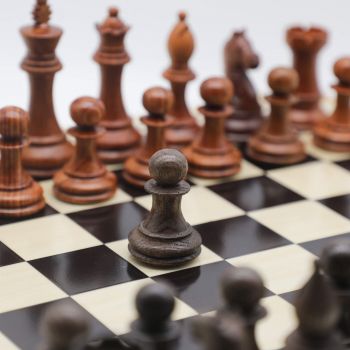
Overview of Chess
Chess is a classic board game that has been played for centuries. It is a two player strategy game that is played on a square board of sixty four squares. Each player begins with sixteen pieces that move in distinct patterns. The objective of the game is to place the opponent's king under attack in a way that it cannot escape, a situation known as checkmate.
Understanding the Board and Pieces
The board is arranged so that each player has a light square on the right side. The pieces are set up on the first two rows for each side. The back row contains, from left to right, a rook, a knight, a bishop, a queen, a king, a bishop, a knight, and a rook. The row in front of these pieces is filled with pawns. Each piece has its own method of movement and capture.
Movement Basics
- The rook moves any number of squares horizontally or vertically.
- The bishop moves any number of squares diagonally.
- The queen combines the powers of the rook and the bishop.
- The king moves one square in any direction.
- The knight moves in an L shape: two squares in one direction and then one square perpendicular.
- The pawn moves forward one square, with the option to move two squares on its first move, and captures diagonally.
Practical Gameplay Guidance
New players often benefit from focusing on piece development during the opening phase. This means moving pieces from their starting squares to positions where they control the center of the board. Controlling the central squares allows for greater mobility and creates more opportunities for attack.
It is advisable to avoid moving the same piece repeatedly in the early stages. Instead, bring out each minor piece, such as knights and bishops, to active squares. Connecting the rooks by moving the queen and bishops off the back rank also improves coordination.
When planning attacks, consider the safety of the king. Castling is a special move that places the king behind a wall of pawns and brings a rook toward the center. Castling on the side that offers the most protection is usually the best choice.
During the middle game, look for tactical motifs such as forks, pins, and discovered attacks. A fork occurs when a single piece attacks two or more enemy pieces at the same time. A pin restricts a piece from moving because it would expose a more valuable piece behind it. A discovered attack happens when moving one piece reveals an attack from another piece.
In the endgame, the reduced number of pieces changes the strategic priorities. King activity becomes crucial. The king should move toward the center and support pawns that are close to promotion. Understanding basic pawn structures and how to create passed pawns can greatly increase winning chances.
Benefits of Playing Chess
Chess offers mental benefits that extend beyond the board. Regular play improves concentration, problem solving, and planning skills. The game also encourages patience and the ability to think several moves ahead. Many educational programs incorporate chess to develop logical reasoning in students.
Online platforms provide opportunities to play against opponents from around the world at any time. These platforms often include rating systems that match players of similar skill levels, allowing for balanced and challenging games.
Resources for Improving Your Game
There are numerous books, videos, and websites dedicated to chess instruction. Beginners may start with introductory guides that explain the rules and basic tactics. Intermediate players can explore resources that cover opening theory, positional concepts, and endgame techniques. Advanced players often study classic games played by grandmasters to learn strategic ideas and creative combinations.
Joining a local chess club or participating in online tournaments can provide valuable experience. Engaging with a community of players offers the chance to receive feedback, discuss strategies, and stay motivated.
Common Questions About Chess
How long does a typical chess game last?
The length of a game varies depending on the time control used. Casual games without a clock can last from fifteen minutes to several hours. Competitive games with a clock often have set limits such as fifteen minutes per player for rapid games or ninety minutes for classical games.
What is the best way to learn opening principles?
Focusing on controlling the center, developing minor pieces, and ensuring king safety are the core principles. Studying a few common opening lines and understanding the ideas behind them is more beneficial than memorizing long sequences of moves.
Can I improve my chess without a coach?
Yes, self‑study is possible with the help of books, online lessons, and practice games. Analyzing one's own games and reviewing mistakes can lead to steady improvement.
What is the difference between a draw and a stalemate?
A draw can occur in several ways, such as agreement between players, insufficient material, threefold repetition, or the fifty move rule. A stalemate is a specific type of draw that happens when a player has no legal move and their king is not in check.
How does rating affect my matchmaking?
Rating systems assign a numerical value based on performance. Players are typically paired with opponents whose ratings are close to theirs, which helps maintain balanced and competitive games.